

Why Women Use Facial Oils Nightly: 2026 Guide

Facial oils are nourishing occlusives that women apply nightly to seal in moisture, replenish skin lipids and support the skin’s natural overnight repair cycle. The practice of using facial oils nightly has grown from a niche ritual into a mainstream skincare step and the science behind it is genuinely compelling. These plant-based formulas deliver omega fatty acids, antioxidants and vitamins that your skin absorbs while you sleep. Whether you are 22 or 44, adding a facial oil to your nightly skincare routine can transform how your skin looks and feels by morning.
Why women use facial oils nightly for better skin
The core reason is simple: your skin loses moisture overnight through a process called transepidermal water loss, or TEWL. Facial oils act as occlusives that reduce TEWL by forming a protective layer over the skin’s surface. That layer slows evaporation and keeps the water from your moisturizer and serums locked in where it belongs. The result is softer, plumper skin by morning rather than the tight, dull feeling that comes from overnight moisture loss.
Facial oils also deliver something moisturizers often cannot: concentrated fatty acids that directly reinforce the skin’s lipid matrix. Think of your skin barrier as a brick wall. The bricks are skin cells, and the mortar is made of lipids. When that mortar thins, moisture escapes and irritants get in. Plant-based oils supply vitamins and fatty acids that rebuild that mortar, improving texture and elasticity over time. That is the real reason the benefits of facial oils go far beyond surface-level glow.

How do facial oils improve skin hydration overnight?
Your skin does its most active repair work between 11 PM and 4 AM. Cell turnover accelerates, collagen synthesis increases and the barrier works to recover from the day’s environmental stress. Nighttime application allows oils to settle deeply and reinforce skin barrier function during this renewal cycle, which means you wake up with noticeably softer, more resilient skin.
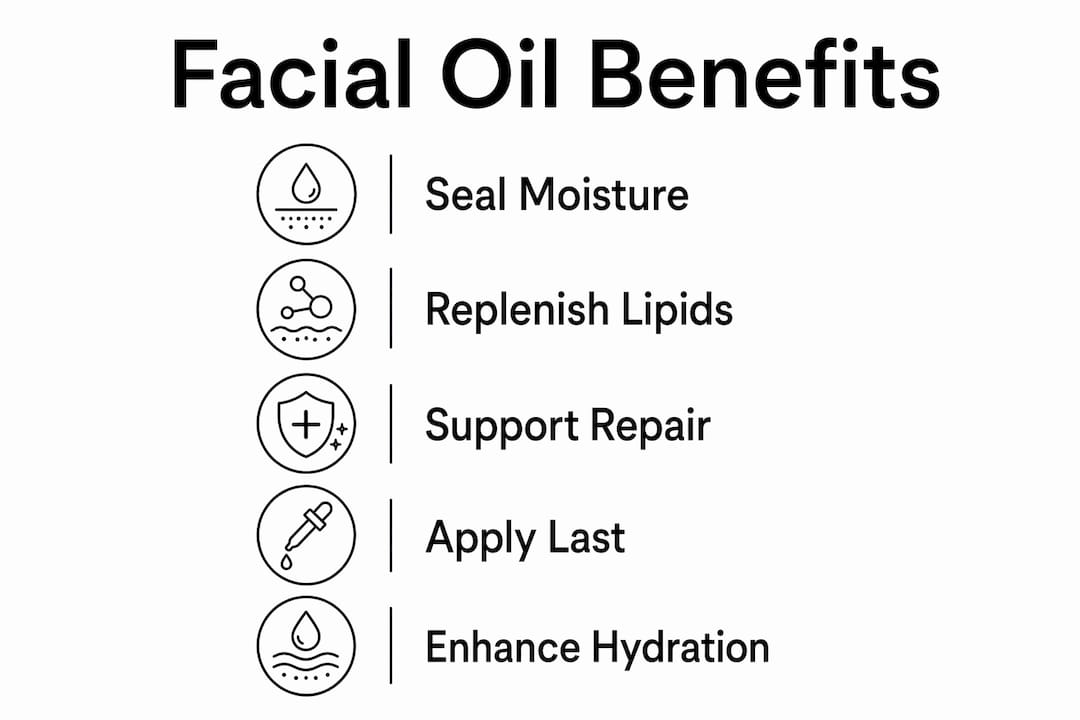
The fatty acids in facial oils, particularly linoleic acid and oleic acid, strengthen the lipid matrix that holds skin cells together. A stronger lipid matrix means less moisture escapes overnight and less environmental damage accumulates during the day. Oils rich in omega-3 and omega-6 fatty acids are especially effective at this because they mirror the lipids your skin naturally produces.
Here is what a well-chosen facial oil does for your skin overnight:
- Seals hydration from your moisturizer and serums, preventing overnight moisture loss
- Replenishes lipids that the skin barrier needs to stay intact and resilient
- Delivers antioxidants that neutralize free radical damage accumulated during the day
- Soothes inflammation caused by pollution, UV exposure or active skincare ingredients
- Supports cell renewal by creating an optimal environment for overnight skin repair
Pro Tip: Apply your facial oil as the very last step in your nightly skincare routine, after your moisturizer. This locks in every layer beneath it and maximizes the occlusive benefit.
Are facial oils worth it for women in their 30s and 40s?
Women in their 30s and 40s get the most dramatic results from nightly facial oil use, and there is a clear biological reason for that. Women aged 40+ often produce fewer natural lipids, which weakens the skin barrier and leads to increased dryness, fine lines and a loss of that natural glow. Hormonal shifts during perimenopause accelerate this process, making the skin thinner and more reactive than it was in your 20s.
This is why so many women in midlife feel like their moisturizer has suddenly stopped working. Skincare expert Ané Auret explains that moisturizers alone no longer deliver the lipid support that aging skin needs. The moisturizer still provides water content, but without a lipid-rich oil on top, that water evaporates before the skin can use it. Adding a facial oil restores the missing lipid layer and seals the hydration in.
“Many midlife women misinterpret rapid moisture loss as moisturizer failure. What their skin actually needs is the fatty acid support that only a facial oil can provide.” — Ané Auret, skincare expert
Clinical observations from 2026 confirm that omega fatty acid-rich oils fortify the lipid matrix, reducing tightness and flakiness within weeks of consistent nightly use. For women in their 30s who are not yet experiencing significant barrier thinning, starting a nightly oil routine now is one of the best preventive steps you can take. You are essentially giving your skin the raw materials it needs before it starts running low. Diet also plays a role in how your skin produces lipids, and you can read more about that connection in The Holistic Science Co.’s guide on how diet shapes skin glow.
Can facial oils help oily or acne-prone skin?
The biggest myth in skincare is that oily or acne-prone skin should avoid facial oils entirely. Dermatological guidance confirms that non-comedogenic oils used as a thin final layer can actually regulate sebum production and support acne-prone skin without clogging pores. When your skin is stripped of its natural oils by harsh cleansers or acne treatments, it overproduces sebum to compensate. A lightweight, non-comedogenic oil signals to your skin that it does not need to go into overdrive.
Here is a quick comparison to help you choose the right approach:
| Skin Type | Best Oil Choice | Application Tip |
|---|---|---|
| Oily or acne-prone | Jojoba, rosehip, or squalane | One to two drops as the final step |
| Dry or mature | Marula, argan, or sea buckthorn | Two to three drops pressed gently into skin |
| Combination | Rosehip or jojoba | Apply only to dry zones; avoid the T-zone |
| Sensitive | Chamomile-infused or sea buckthorn | Patch test first; use every other night initially |
Facial oils also soothe the irritation that comes from acne treatments like retinoids or benzoyl peroxide. Those treatments are effective but notoriously drying. A thin layer of a calming oil like jojoba or squalane applied after your treatment helps maintain the skin barrier without interfering with the active ingredient. For more targeted support, The Retreat Aesthetics offers professional acne treatment options that can complement your at-home oil routine.
Pro Tip: If you have acne-prone skin, start with jojoba oil. Its molecular structure closely resembles human sebum, making it one of the least likely oils to trigger breakouts.
How to add facial oils to your nightly skincare routine
Layering order matters more than most people realize. Applying oil before your water-based products blocks absorption because oil repels water. The correct sequence ensures every product does its job properly.
- Cleanse your face to remove makeup, sunscreen and the day’s buildup.
- Apply toner or essence while skin is still slightly damp to maximize absorption.
- Use your serum (vitamin C, hyaluronic acid or retinol depending on your goals).
- Apply moisturizer to deliver the water content your skin needs overnight.
- Finish with your facial oil as the final step to seal everything in and reinforce the barrier.
The amount matters too. Two to three drops is enough for the entire face. Warming the oil between your palms before pressing it gently into your skin improves absorption and prevents the greasy feeling that comes from applying too much. For lightweight oils like rosehip or squalane, two drops is plenty. Richer oils like marula or argan may need three drops for full coverage. The Holistic Science Co.’s simplified skincare routine guide walks through this layering logic in detail if you want a fuller picture of how each step supports the next.
What are the most common facial oil mistakes?
The most frequent mistake is using facial oil instead of moisturizer rather than after it. Oils do not hydrate by themselves. They seal hydration but do not supply it. Skipping your moisturizer and going straight to oil means you are locking in very little water, which can actually leave skin feeling tighter and drier over time.
Other mistakes worth avoiding:
- Using too much product. More than three drops creates a greasy film that sits on top of the skin rather than absorbing into it.
- Skipping patch testing. New oils, even natural ones, can trigger reactions. Apply a small amount to your inner arm for two nights before using it on your face.
- Applying oil to dry skin only. Press oil into slightly damp skin after moisturizer for better absorption and a more comfortable finish.
- Ignoring your skin zones. Combination skin benefits from zonal application. Use oil on your cheeks and forehead but skip the nose and chin if those areas are already oily.
Pro Tip: If your skin feels greasy in the morning, you are using too much oil or applying it too early in your routine. Cut back to one drop and wait five minutes after your moisturizer before applying.
Key takeaways
Facial oils work nightly because they seal moisture, replenish skin lipids and support the barrier repair that happens while you sleep.
| Point | Details |
|---|---|
| Oils are occlusives, not hydrators | Always apply oil after moisturizer to lock in water content, not instead of it. |
| Barrier repair happens overnight | Nighttime is when skin renews itself, making oil application most effective then. |
| Mature skin benefits most | Women 30+ with thinning lipid production see the fastest improvement from nightly oil use. |
| Acne-prone skin can use oils | Non-comedogenic oils like jojoba regulate sebum and soothe irritation from acne treatments. |
| Layering order determines results | Apply in the sequence: cleanser, toner, serum, moisturizer, then oil as the final step. |
What I have learned from years of nightly oil use
I started using facial oils in my early 30s mostly out of curiosity, and I will be honest: the first week felt strange. My skin was not used to that final layer of richness, and I over-applied constantly. Once I dialed back to two drops of rosehip oil pressed in after moisturizer, everything changed. My skin stopped feeling tight by morning. The fine lines around my eyes looked softer within about three weeks.
What surprised me most was how much my skin’s texture improved, not just its hydration. I had expected moisture. I did not expect the kind of smoothness that makes foundation sit differently on your skin. That comes from the fatty acids rebuilding the lipid matrix over time, and it is a slow, satisfying process.
My honest advice: be patient with it. The first two weeks are not dramatic. By week four, you will notice your skin looks more awake without doing anything extra. The oils I keep coming back to are rosehip for everyday use and marula when my skin needs extra nourishment in winter. If you are in your 40s and feel like your routine has stopped delivering, adding a facial oil at night is the single change most likely to shift things.
— T
Nourish your skin nightly with The Holistic Science Co.
If you are ready to experience what a well-formulated facial oil can do for your skin, The Holistic Science Co. has you covered. Their artisanal facial oils are crafted with plant-based ingredients, including omega-rich botanicals that nourish, soothe and seal hydration exactly the way your skin needs at night.

Every product from Theholisticscienceco.com is designed with real skin science in mind, so you get the fatty acids, antioxidants and barrier support your skin craves without unnecessary fillers or synthetic additives. Whether your skin is dry, combination or going through changes in your 30s or 40s, there is a formula tailored to your needs. Visit Theholisticscienceco.com to find your perfect nightly oil and start waking up to genuinely better skin.
FAQ
What does a facial oil actually do for your skin?
A facial oil acts as an occlusive that seals moisture into the skin and replenishes lipids in the skin barrier. It does not add water itself but locks in hydration from the moisturizer and serums applied beneath it.
When should you apply facial oil in your nightly routine?
Apply facial oil as the final step in your nightly skincare routine, after your moisturizer. This layering order ensures the oil seals in every water-based product beneath it.
Can women with oily skin use facial oils at night?
Yes. Non-comedogenic oils like jojoba and squalane can regulate sebum production and soothe irritation without clogging pores, making them suitable for oily and acne-prone skin types.
How long does it take to see results from nightly facial oil use?
Most women notice softer, more hydrated skin within one to two weeks. Improvements in texture, elasticity and fine lines typically become visible after three to four weeks of consistent nightly use.
Do facial oils replace moisturizer in a skincare routine?
No. Facial oils and moisturizers serve different functions. Moisturizers supply water content, while oils seal that hydration in. Using oil without moisturizer underneath can actually worsen dryness over time.
Recommended
- Your Simplified Skin Care Routine: 5 Steps That Work - The Holistic Science Co.
- How Diet Shapes Your Skin Appearance and Glow - The Holistic Science Co.
- Why Men Need Separate Skincare for Better Skin Health - The Holistic Science Co.
- Top 5 Cosmetics Vegan Alternatives 2026 - The Holistic Science Co.