

How to Layer Skincare Products Correctly in 2026

Layering skincare products correctly means applying them from lightest to heaviest consistency so each ingredient can fully absorb before the next one goes on. This single principle determines whether your vitamin C serum actually reaches your skin cells or just sits trapped under a thick moisturizer doing nothing. Brands like The Ordinary have built entire product lines around this logic, and dermatologists consistently point to proper layering sequence as the most overlooked factor in skincare results. Get the order right, and your routine works. Get it wrong, and even the best products underperform.
How to layer skincare products correctly: the right order
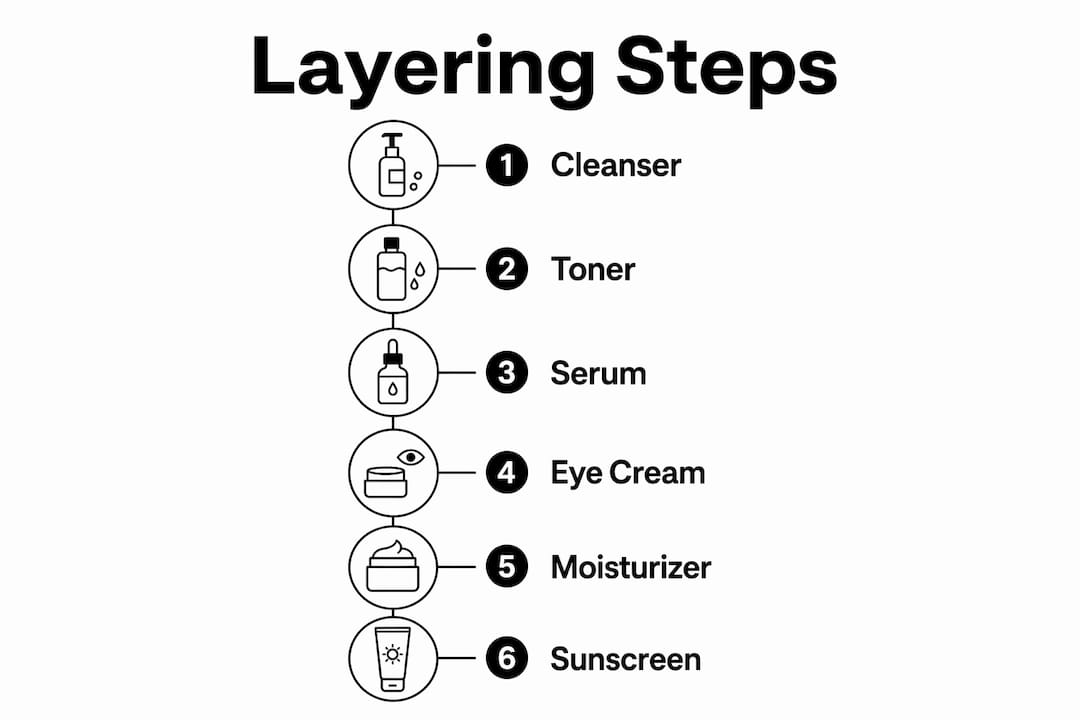
The standard layering sequence runs: cleanser, toner, serum, eye cream, moisturizer and sunscreen in the morning. This order follows the logic of molecular weight and water content. Smaller, water-soluble molecules penetrate deepest, so they go first. Heavier, oil-based formulas seal everything in and go last.
The science behind this is straightforward. Molecular weight guides layering: the most water-soluble ingredients go first, and heavier oil-based products go last to create a protective barrier. Think of it like building a sandwich. You would not put the bread in the middle.
Here is the full sequence with the reasoning behind each step:
| Step | Product | Why It Goes Here |
|---|---|---|
| 1 | Cleanser | Removes debris and preps skin for absorption |
| 2 | Toner | Rebalances pH and delivers first hydration layer |
| 3 | Serum | Concentrated actives penetrate clean, prepped skin |
| 4 | Eye cream | Thinner than moisturizer; targets delicate orbital area |
| 5 | Moisturizer | Locks in serums and supports the skin barrier |
| 6 | Facial oil (optional) | Creates an occlusive layer over moisturizer |
| 7 | Sunscreen (AM only) | Final protective shield; never goes under moisturizer |
One exception trips up even experienced enthusiasts: facial oils. Oils applied too early block moisturizer absorption because they create an occlusive barrier that water-based products cannot penetrate. Always apply facial oil after your moisturizer, not before. In your evening routine, double cleansing with an oil cleanser followed by a water-based cleanser removes sunscreen and makeup more thoroughly than a single cleanse alone.
How long should you wait between skincare layers?
The recommended wait time between skincare layers is 30–90 seconds, with 60 seconds serving as a reliable default. That one minute gives each product enough time to absorb and dry down before the next formula goes on. Skipping this step is one of the most common reasons people experience pilling, that frustrating little balling-up of product on the skin’s surface.
Pilling is not just annoying. It signals that your products are not absorbing properly, which means you are wasting both product and money. Extending wait time to 90–120 seconds or switching to a thinner product texture usually solves the problem. If you are in a rush in the morning, apply your toner while you brush your teeth. By the time you are done, your skin is ready for the next step.
Pro Tip: Thicker serums and gel-cream hybrids need closer to 90 seconds to absorb fully. If your skin feels tacky or your next product rolls off, wait longer before layering.
Timing also matters for active ingredients. Vitamin C serums, for example, benefit from a full 60-second wait before you apply anything on top. This gives the ascorbic acid time to stabilize on the skin and start working. Rushing through your routine compresses absorption windows and reduces the return on every product you apply.
What are the most common layering mistakes?
Using too many products is the most widespread mistake in skincare layering. Skin absorption plateaus beyond 7 layers, and irritation risk climbs with every additional formula you add. More products do not mean better skin. They often mean a compromised barrier and confused skin that cannot respond to any single ingredient effectively.
Incompatible actives are the second major pitfall. Vitamin C and benzoyl peroxide, when layered together, can deactivate each other and cause irritation. Similarly, retinoids and exfoliating acids like AHAs and BHAs should not be applied in the same session, especially when you are new to either ingredient. The skin cannot handle that level of chemical activity at once.
Here is a quick reference for what to do and what to avoid:
Do:
- Apply products from thinnest to thickest consistency every time
- Wait at least 60 seconds between each layer
- Use one active ingredient per session when starting out
- Patch test new products before adding them to your full routine
- Check ingredient compatibility before combining actives
Do Not:
- Layer more than 5–7 products in a single routine
- Apply facial oils before moisturizer
- Mix vitamin C with benzoyl peroxide in the same session
- Skip sunscreen because you applied moisturizer with SPF
- Rush through your routine and apply products back to back
Signs that your layering is off include persistent pilling, redness after application, a tight or stinging sensation, and products that seem to sit on top of your skin rather than absorb. If you notice any of these, strip your routine back to the basics. A cleanser, one serum, and a moisturizer is a perfectly complete routine. Rebuild slowly from there.
How do you customize layering for your skin type?
Every skin type benefits from the same foundational sequence, but the products you choose within that sequence should reflect your specific concerns. The layering framework stays constant. What changes is the texture, concentration, and category of product at each step.
For oily and acne-prone skin:
- Choose water-based, gel-textured serums and moisturizers
- Skip facial oils entirely or use a single drop of a non-comedogenic option like squalane
- Layer a niacinamide serum before moisturizer to regulate sebum
- Consider professional acne layering guidance if breakouts persist despite a consistent routine
- Avoid heavy occlusives that trap excess sebum
For dry skin:
- Add a hydrating toner or essence as a second toning step
- Layer a hyaluronic acid serum before a richer moisturizer
- Seal with a facial oil or balm as the final step in your PM routine
- Look for ceramide-based moisturizers that reinforce the skin barrier
For sensitive skin:
- Limit leave-on products to around four per routine to reduce cumulative irritation risk
- Avoid layering multiple actives; choose one targeted ingredient and use it consistently
- Fragrance-free formulas reduce the chance of a reaction at any layer
- A simplified five-step routine is often more effective than a complex one for reactive skin
For combination skin:
- Apply lightweight gel moisturizer to oily zones and a richer cream to dry areas
- Use a balancing toner across the full face before targeting specific zones
Incorporating actives like vitamin C, retinoids and AHAs requires extra care. Experts recommend one active per session to maximize effectiveness and avoid irritation. Use vitamin C in the morning and retinoids at night. Introduce AHAs and BHAs on alternate evenings until your skin builds tolerance. Understanding natural ingredient compatibility before you layer actives saves you from weeks of unnecessary irritation.
Key takeaways
Layering skincare products correctly from thinnest to thickest is the single most effective way to maximize ingredient absorption and protect your skin barrier.
| Point | Details |
|---|---|
| Thinnest to thickest is the rule | Apply cleanser, toner, serum, eye cream, moisturizer, and sunscreen in that order every morning. |
| Wait 60 seconds between layers | Rushing causes pilling and reduces how well each product absorbs into the skin. |
| Cap your routine at 7 products | More than 7 layers overwhelms skin absorption capacity and raises irritation risk. |
| Keep actives separate | Never layer vitamin C with benzoyl peroxide or retinoids with exfoliating acids in the same session. |
| Customize by skin type | Oily skin benefits from gel textures; dry skin needs richer occlusives; sensitive skin does best with fewer products. |
Why i think most people are overcomplicating their routines
After spending years testing products and watching how skin actually responds to layering, the pattern I keep seeing is the same. People add more products expecting better results, and their skin gets worse. The dermatologist insight that less is more for skin resilience is not a marketing angle. It is what I have watched play out repeatedly.
The most dramatic skin improvements I have seen come from people who stripped their routines down to four or five products and actually waited between layers. Not from adding a seventh serum or doubling up on actives. The timing piece is the one most people skip because it feels passive, but those 60 seconds are doing real work.
My honest recommendation for anyone feeling overwhelmed: start with a cleanser, a single targeted serum, a moisturizer, and sunscreen. Master that sequence first. Learn how your skin responds to each product before you add anything new. Skincare is not a race to the most complex routine. The most effective routine is the one you can do consistently, in the right order, with enough time between each step for your skin to actually absorb what you are giving it.
— T
Nourish your skin with The Holistic Science Co.
Your layering routine is only as good as the products you put in it. Theholisticscienceco crafts artisanal health and beauty products designed to work beautifully at every step of your routine, from the first cleanse to the final moisturizing layer. Each formula is made with ingredient compatibility in mind, so you never have to guess whether two products will play nicely together.

Whether you are building your first routine or refining one you have had for years, The Holistic Science Co. has something that fits. Explore the full collection and find products that soothe, nourish, and genuinely support your skin at Theholisticscienceco.com. Your skin deserves ingredients you can trust, in formulas that actually absorb.
FAQ
What is the correct order to layer skincare products?
The correct order is cleanser, toner, serum, eye cream, moisturizer, and sunscreen in the morning. Apply products from thinnest to thickest consistency so each layer can absorb fully before the next one goes on.
Can you layer too many skincare products?
Yes. Skin absorption plateaus beyond 7 layers, and each additional product increases cumulative irritation risk. Dermatologists recommend limiting leave-on products to around four per routine for most skin types.
How long should you wait between skincare layers?
Wait 30–90 seconds between each product, with 60 seconds as a reliable default. Applying products too quickly causes pilling and reduces how effectively each formula absorbs.
Can you layer vitamin c and retinol together?
No. Use vitamin C in your morning routine and retinol at night. Layering both in the same session increases irritation risk without adding benefit, and combining retinoids with exfoliating acids in one session is equally problematic.
Does the layering order change for a nighttime routine?
The core sequence stays the same, but sunscreen is replaced by a richer moisturizer or facial oil as the final step. Evening routines can also include a double cleanse and targeted treatments like retinoids or overnight masks.
Recommended
- Your Simplified Skin Care Routine: 5 Steps That Work - The Holistic Science Co.
- Types of Natural Skincare Ingredients: Your Full Guide - The Holistic Science Co.
- How Diet Shapes Your Skin Appearance and Glow - The Holistic Science Co.
- Why Men Need Separate Skincare for Better Skin Health - The Holistic Science Co.