

Benefits of Fasting: What Science Says in 2026

Fasting is defined as a deliberate period of abstaining from food, and clinical research now confirms it delivers measurable improvements to metabolic health, brain function, and cellular repair. Intermittent fasting, the most studied form, cycles between eating and fasting windows to trigger these changes without extreme restriction. Johns Hopkins Medicine and Harvard Health both endorse fasting as a credible, evidence-backed health practice. The benefits of fasting extend well beyond weight loss, reaching into cognitive performance, cardiovascular health, and even how your cells age. This article breaks down what the science actually shows, which methods work best, and how to start safely.
What are the primary physical health benefits of fasting?
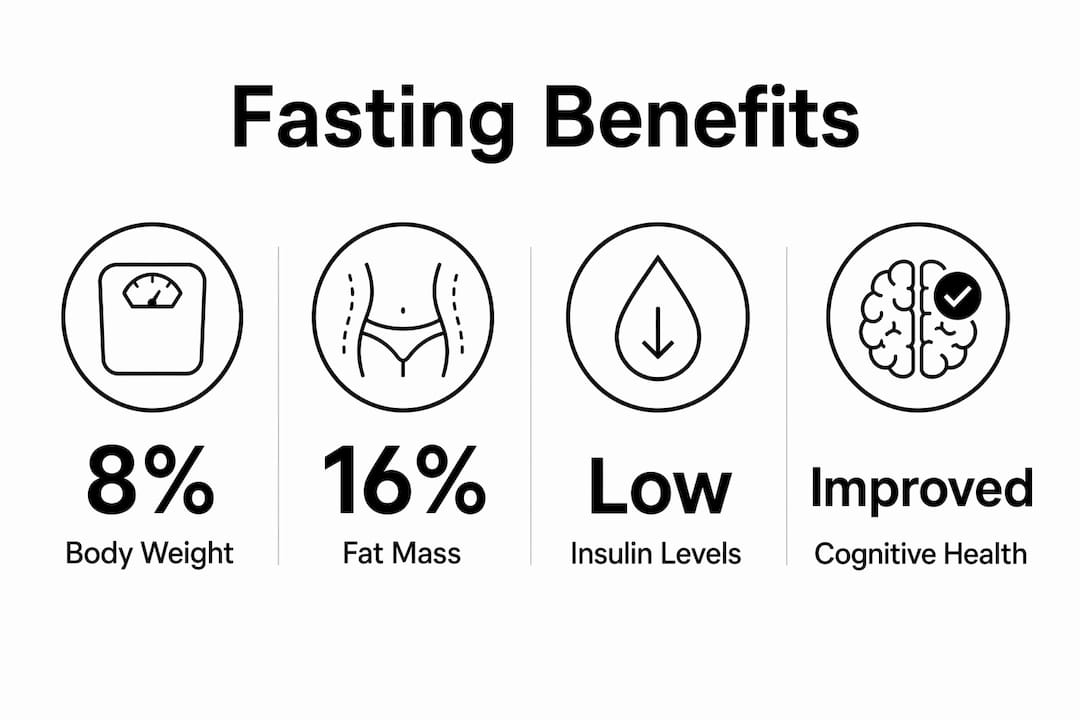
Fasting produces some of its most dramatic results in the body. Clinical trial data shows participants practicing intermittent fasting lost 8% body weight and 16% fat mass over six months. That is not a minor shift. It represents a meaningful reduction in metabolic disease risk, including type 2 diabetes and cardiovascular disease.
Insulin regulation is one of the most significant physical gains. Fasting lowers circulating insulin levels, which reduces insulin resistance over time. Lower insulin resistance means your body processes glucose more efficiently, which protects against blood sugar spikes and long-term pancreatic strain.

Cardiovascular markers also respond well. Intermittent fasting improves blood pressure, resting heart rate, and other cardiovascular measures according to clinical trials at Johns Hopkins Medicine. These changes reduce the daily workload on your heart and lower the risk of hypertension-related events.
Prolonged fasting intervals of 40 or more hours take the physical benefits further. Research published in late 2025 shows that extended fasting significantly increases circulating growth hormone, which accelerates fat oxidation while preserving lean muscle mass. That combination is rare in most weight loss approaches, which tend to sacrifice muscle along with fat.
| Health Marker | Pre-Fasting | Post-Fasting (6 months) |
|---|---|---|
| Body weight | Baseline | Down 8% |
| Fat mass | Baseline | Down 16% |
| Blood pressure | Elevated in many | Measurably reduced |
| Resting heart rate | Baseline | Improved |
| Insulin sensitivity | Reduced | Significantly improved |
Pro Tip: Start with a 12-hour overnight fast before moving to 16/8 intermittent fasting. Gradual progression reduces hunger-driven setbacks and makes the habit stick.
How does fasting support mental and cognitive health?
Fasting sharpens the brain through a process called metabolic switching. When glucose runs low, the body shifts to burning ketones for fuel. Neuroscientist Mark Mattson at Johns Hopkins reports that this switch boosts memory and protects against neurodegenerative diseases like Alzheimer’s and Parkinson’s. The brain, it turns out, runs very well on ketones.
Fasting also promotes neurogenesis, the growth of new brain cells, and improves synaptic plasticity. Synaptic plasticity is the brain’s ability to strengthen or weaken connections between neurons based on activity. Better plasticity means faster learning and stronger memory retention.
Many people who fast regularly report improved mood and mental clarity during fasting windows. The mechanism likely involves reduced inflammation and more stable blood sugar, both of which affect neurotransmitter function. Mood swings tied to blood sugar crashes become less frequent as the body adapts to fasting.
The cognitive benefits of fasting include:
- Improved working memory and recall
- Reduced brain fog during fasting windows
- Enhanced focus and alertness, particularly in the morning
- Potential protection against age-related cognitive decline
- Reduced neuroinflammation linked to depression and anxiety
One important caution: most robust cognitive studies involve people with metabolic conditions or early neurodegeneration. Evidence in healthy individuals is promising but still building. Fasting mental clarity is real for many people, but individual responses vary.
What cellular processes does fasting activate for long-term health?
Autophagy is the cellular cleanup process that fasting triggers most powerfully. The word comes from Greek, meaning “self-eating.” Your cells use autophagy to break down and recycle damaged proteins, dysfunctional mitochondria, and cellular debris. Without regular autophagy, this waste accumulates and contributes to aging and chronic disease.
Autophagy activation during fasting is critical for cellular repair and links directly to anti-aging and metabolic health improvements. This is not a fringe claim. It is the mechanism behind the 2016 Nobel Prize in Physiology or Medicine, awarded to Yoshinori Ohsumi for his work on autophagy. Fasting is one of the most reliable ways to activate it.
Fasting also reduces systemic inflammation. Fasting enhances mitochondrial function, improves gut microbiome diversity, and lowers markers of chronic inflammation throughout the body. Chronic low-grade inflammation underlies conditions from heart disease to autoimmune disorders, so reducing it has wide-reaching effects.
The hormonal environment during fasting supports cellular maintenance too. Growth hormone rises, insulin falls, and the body shifts into a repair-focused state rather than a growth-focused one. This hormonal shift is what makes fasting qualitatively different from simply eating less.
| Fasting Duration | Autophagy Activation | Key Cellular Benefit |
|---|---|---|
| 12–16 hours | Mild | Initiates cellular cleanup |
| 16–24 hours | Moderate | Reduces oxidative stress |
| 24–40 hours | Strong | Significant protein recycling |
| 40+ hours | Intense | Maximum GH elevation, deep repair |
Pro Tip: A 16–24 hour fast once or twice per week activates meaningful autophagy without the recovery demands of prolonged fasting. You do not need to fast for days to get cellular benefits.
What are the different fasting methods and how do their benefits compare?
Fasting is not one-size-fits-all. The method you choose shapes the results you get, the side effects you experience, and how long you can sustain the practice. Registered dietitian Julia Zumpano at Cleveland Clinic warns that extreme or unsustainable fasting methods can cause negative outcomes, including nutrient deficiencies and disordered eating patterns.
Here are the four most studied fasting approaches:
-
16/8 intermittent fasting. You eat within an 8-hour window and fast for 16 hours each day. This is the most popular method because it fits naturally into most schedules. It supports weight loss, insulin regulation, and mild autophagy. Most people skip breakfast and eat from noon to 8 p.m.
-
5:2 fasting. You eat normally five days per week and restrict calories to around 500 on two non-consecutive days. This method suits people who find daily fasting windows difficult. It produces similar metabolic benefits to daily intermittent fasting over time.
-
Alternate day fasting. You alternate between normal eating days and fasting or very low-calorie days. Studies show strong results for weight loss and cardiovascular markers, but adherence is harder. This method works best with medical supervision.
-
Prolonged fasting (40+ hours). You fast for 40 hours or more, typically once or twice per month. This triggers the most intense autophagy and the highest growth hormone elevation. It carries more risk and requires careful preparation, including electrolyte management and medical clearance.
For most healthy adults, the 16/8 method offers the best balance of benefit and sustainability. You can explore a detailed comparison of fasting types to find the schedule that fits your lifestyle.
How to safely incorporate fasting into your daily routine
Starting fasting safely requires more than just skipping meals. The first step is consulting a healthcare provider, especially if you take medications, have a history of disordered eating, or manage a chronic condition. Close medical supervision is recommended for anyone with pre-existing conditions to monitor electrolyte balance and metabolic responses.
What you eat during your eating window matters as much as when you fast. Fasting combined with nutrient-dense whole foods enhances health benefits and supports fasting goals. Whole grains, vegetables, legumes, and quality proteins give your body the raw materials it needs to repair and rebuild during fasting periods.
Weight loss pace is a useful guide to whether your approach is working sustainably. Intermittent fasting produces a gradual, sustainable weight loss of 0.5 to 1 pound per week in healthy individuals. Faster loss often signals muscle loss or nutrient depletion, not better results.
Practical tips for safe fasting:
- Drink water, black coffee, or plain herbal tea during fasting windows to stay hydrated
- Add electrolytes (sodium, potassium, magnesium) on longer fasting days to prevent fatigue and headaches
- Break your fast with a balanced meal, not a large high-sugar meal that spikes insulin
- Stop fasting and seek medical advice if you experience dizziness, heart palpitations, or extreme weakness
- Track your energy levels and mood weekly to spot patterns and adjust your fasting window
Fasting also has a surprising benefit for your skin. Diet quality during eating windows directly affects skin clarity and glow. You can read more about how diet shapes skin to understand how fasting fits into a broader beauty and wellness routine.
Key Takeaways
The most effective fasting approach combines a consistent fasting window, nutrient-dense eating, and gradual progression to unlock physical, cognitive, and cellular benefits safely.
| Point | Details |
|---|---|
| Weight and metabolic gains | Clinical trials show 8% body weight loss and 16% fat mass reduction over six months of intermittent fasting. |
| Cognitive protection | Metabolic switching during fasting boosts memory and may protect against neurodegenerative diseases. |
| Cellular repair via autophagy | Fasting activates autophagy, which removes damaged proteins and reduces systemic inflammation. |
| Method matters | The 16/8 method suits most people; prolonged fasting (40+ hours) delivers deeper cellular benefits but requires supervision. |
| Nutrition quality is non-negotiable | Fasting success depends equally on what you eat during eating windows and how long you fast. |
Why I think most people approach fasting backwards
Most people start fasting to lose weight fast. That is the wrong goal, and it leads to the wrong behavior. They restrict aggressively, eat poorly during eating windows, and quit within three weeks because they feel terrible. The research does not support aggressive fasting for beginners. It supports gradual, consistent practice paired with genuinely good food.
What I have seen work, time and again, is treating fasting as a tool for cellular health first and weight loss second. When you shift that frame, you naturally make better choices. You eat whole foods because you understand your cells need them. You keep fasting windows consistent because you know autophagy requires time. The weight loss follows, steadily, at that 0.5 to 1 pound per week pace that Harvard Health endorses.
The other mistake I see constantly is ignoring the eating window entirely. Fasting does not cancel out a poor diet. The two work together or not at all. Pair your fasting practice with quality nutrition, adequate sleep, and movement, and the results compound in ways that no single intervention can match on its own.
— T
Nourish your wellness journey with The Holistic Science Co.
Fasting is one powerful piece of a larger wellness picture. The Holistic Science Co. creates artisanal health and beauty products designed to support your body from the inside out, complementing the cellular and metabolic work your fasting practice is already doing. Whether you are looking for skin-nourishing formulas that work alongside your clean eating window or wellness insights that help you feel your absolute best, The Holistic Science Co. has you covered.

Ready to take your wellness routine further? Visit theholisticscienceco.com to explore products and resources built for people who take their health seriously. Your body is doing incredible work. Give it the support it deserves.
FAQ
What are the main benefits of fasting for physical health?
Fasting supports weight loss, improves insulin sensitivity, lowers blood pressure, and reduces cardiovascular risk. Clinical trials show participants lost 8% body weight and 16% fat mass over six months of intermittent fasting.
How does intermittent fasting improve mental clarity?
Fasting triggers a metabolic switch to ketone burning, which supports neurogenesis and synaptic plasticity. Neuroscientist Mark Mattson at Johns Hopkins Medicine links this switch to improved memory and protection against neurodegenerative disease.
What is autophagy and why does fasting activate it?
Autophagy is the process by which cells break down and recycle damaged proteins and mitochondria. Fasting lowers insulin and glucose levels, which signals the body to shift into cellular repair mode and activate autophagy.
Which fasting method is best for beginners?
The 16/8 method is the most sustainable starting point for most healthy adults. It fits naturally into daily schedules and produces consistent metabolic benefits without the risks associated with prolonged or alternate day fasting.
Is fasting safe for everyone?
Fasting is not appropriate for everyone without medical guidance. People with pre-existing conditions, those on medications, or anyone with a history of disordered eating should consult a healthcare provider before starting any fasting protocol.
Recommended
- How Diet Shapes Your Skin Appearance and Glow - The Holistic Science Co.
- Father’s Day 2026: Gifts, Ideas, and Celebration Tips - The Holistic Science Co.
- Why Women Use Facial Oils Nightly: 2026 Guide - The Holistic Science Co.
- How to Choose Cruelty-Free Beauty Brands in 2026 - The Holistic Science Co